NOVAFIT ENERGY · Performance · Nutrition · Science
Why the energy you take at kilometer 20 can work against you at kilometer 35 — and how isomaltulose changes that equation.
There is a moment in long races that many athletes know well, even if they cannot always name it. You have been running for hours. You have taken your gels with discipline. You know you are on top of your nutrition. And yet, somewhere in the second half of the race, something gives way. The pace drops. The legs turn heavy. The head loses focus. It is not the glycogen wall — you already know that one. It is something else.
That "something else", in many cases, is the hypoglycemic rebound. And in most cases, it has been triggered by the very gel you took twenty minutes earlier.
What hypoglycemic rebound is and why it happens
When you ingest simple sugars — glucose, sucrose, fast-absorbing maltodextrin — blood glucose rises rapidly. The pancreas detects that spike and responds by secreting insulin to bring it back to normal. So far, standard physiology.
The problem appears when that spike is too sharp. The insulin response can overshoot, pulling blood glucose below the optimal level: this is reactive hypoglycemia. At rest, the body handles it without drama. But in the middle of effort — when the muscles are burning glucose at maximum speed — that drop becomes a real metabolic emergency.
The result is predictable: acute fatigue, loss of concentration, the sensation of hollow legs and an intense urge to eat again. What many athletes interpret as a "drop in energy" or a "moment of weakness" is, in reality, their own hormonal system working against them because they took a gel that was absorbed too quickly.
And here comes what nobody tells you: if at that moment you take another fast-absorbing gel to recover, the cycle repeats. Spike. Insulin. Rebound. Crash.
Why conventional gels amplify the problem
Most gels on the market are formulated with one or two carbohydrate sources — typically maltodextrin and/or glucose — which have very high glycemic indices. They absorb quickly, which is precisely their commercial appeal. "Instant energy" is easy to sell.
But the speed of absorption is exactly the problem. A gel that raises blood glucose in four minutes creates a spike so pronounced that the hormonal system cannot manage it with precision. The insulin response is, by necessity, aggressive. And an aggressive insulin response during exercise is the perfect recipe for rebound.
The effect is especially pronounced in efforts of more than two hours, when glycogen stores begin to deplete and the body becomes more sensitive to glucose fluctuations. Precisely when you need stability the most, conventional gels give you the opposite.
Isomaltulose: real energy without the rebound
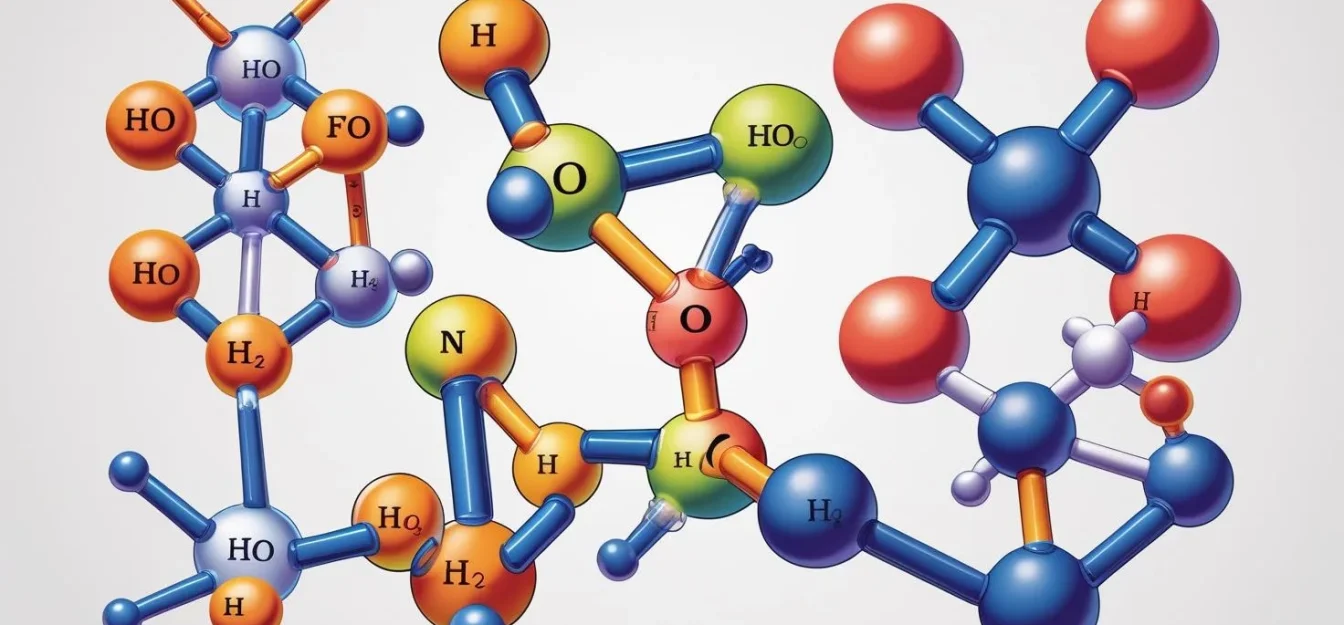
Isomaltulose — marketed under the name Palatinose — is a naturally occurring disaccharide found in honey and sugar cane. Its molecular structure is identical to sucrose in composition — glucose plus fructose — but the bond between the two sugars is different: an alpha-1,6 link instead of the alpha-1,2 link of sucrose.
That apparently minor structural difference has profound physiological consequences. Isomaltulose is digested much more slowly than sucrose or maltodextrin. Its glycemic index is 32 — versus 60-85 for maltodextrin or 100 for pure glucose. That means the glucose curve it produces is smooth, prolonged and controllable. No spike. No exaggerated insulin response. No rebound.
What it produces instead is exactly what the athlete needs in long efforts: a continuous and stable supply of glucose for 90-120 minutes per dose. Energy that does not arrive all at once or vanish all at once. A flat curve where other gels offer a rollercoaster.
The five-source architecture: why the order matters
The solution is not to replace all the fast sugars with isomaltulose — that would delay the arrival of energy too much in moments of maximum demand. The solution is to combine both intelligently.
NovaFit Energy gels combine five carbohydrate sources that act in a temporal cascade:
Golden Sugar and glucose syrup — energy available in the first 5-10 minutes, without the sharp spikes of pure glucose.
Fructose syrup and maltodextrin — sustained supply over the following 30-45 minutes, taking advantage of the two intestinal transporters simultaneously (SGLT-1 and GLUT-5).
Isomaltulose (Palatinose) — the anchor of the formula. Slow, controlled absorption extending to 90-120 minutes, stabilizing blood glucose when the other sources are depleted and eliminating hypoglycemic rebound.
The result is an energy curve radically different from that of a conventional gel. Not a peak followed by a crash, but a sustained plateau that covers the full interval between gels — and arrives uninterrupted at the next one.
What this means out on the course
Hypoglycemic rebound is not a problem the athlete solves with more willpower or better training. It is a formulation problem. And it is solved in the workshop, not on the start line.
The patterns we observe consistently among athletes using NovaFit Energy in long efforts are always the same: absence of that typical drop in the second half, less urgency to take the next gel, and — most significantly — the ability to hold pace in the final kilometers where deterioration used to set in.
It is not magic. It is that the energy arrives when it has to arrive, in the amount it has to arrive, without triggering the hormonal mechanism that destroys it.
We do not formulate so the label looks good. We formulate so the muscle has fuel when it needs it — and so the hormonal system does not take it away twenty minutes later.
NovaFit Energy — novafitenergy.com — @novafitenergy
Sant Feliu de Llobregat, Barcelona · Artisans of performance for twelve years