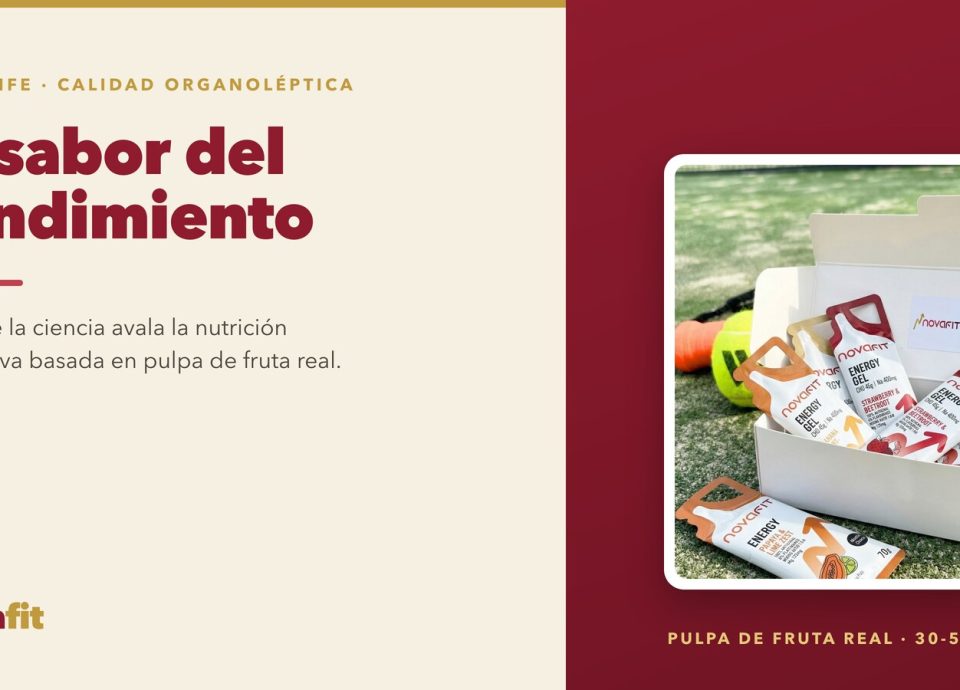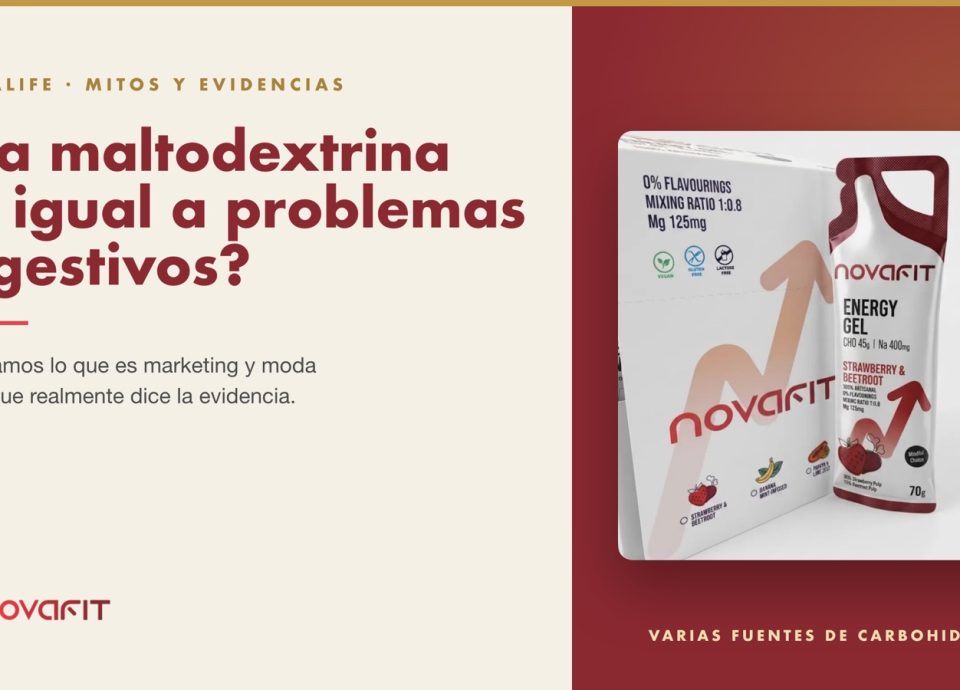
A NOVAFIT energy gel delivers 45 g of carbohydrates from five sources that are absorbed at different times (1:0.8 glucose-fructose ratio), 400 mg of sodium, 125 mg of magnesium bisglycinate and up to 45% real fruit pulp. The intended result: sustained energy without a sharp spike or crash, and fewer digestive issues during effort.
When you open a NOVAFIT gel at kilometre 30 of a race, you're not just making a flavour choice: you're making a metabolic one. And the difference between getting it right or wrong can be several minutes on the clock —or the difference between finishing strong and walking the last five kilometres. In this article we break down, step by step, what happens from the moment you swallow the gel until the muscle turns it into power.
The 45 g of carbohydrates that don't all act at once
The most common mistake when reading a label is to think that "45 g of CHO" is a single thing that hits all at once. It doesn't work that way. The carbohydrates in a NOVAFIT gel come from five different sources that act at different times, like a relay team that never drops the baton.
| Source | Action window | Transporter | Main function |
|---|---|---|---|
| Golden Sugar | 0–5 min | SGLT-1 | Immediate energy |
| Glucose syrup | 0–5 min | SGLT-1 | Fast start |
| Maltodextrin | 5–20 min | SGLT-1 | Low osmolarity, fewer GI issues |
| Fructose (1:0.8 ratio) | 10–35 min | GLUT-5 | Alternative pathway, no saturation |
| Palatinose® (isomaltulose) | 20–60+ min | SGLT-1 | Slow release, avoids the crash |
Minutes 0–5: the start
Golden Sugar and glucose syrup enter the bloodstream almost immediately via the intestinal transporter SGLT-1. Fuel available before you've even finished putting the wrapper away.
Minutes 5–20: the bridge
Maltodextrin takes longer because the gut has to break its long chain first. Its key advantage is low osmolarity: it doesn't draw water into the gut during absorption. The practical result: less bloating, less urgency, fewer involuntary stops.
Minutes 10–35: the alternative pathway, the scientific heart of the formula
Fructose uses the GLUT-5 transporter, completely independent of the SGLT-1 used by glucose. While glucose saturates its absorption pathway once it reaches certain levels, fructose keeps coming in through its own without interfering. This is the basis of the 1:0.8 glucose:fructose ratio used by NOVAFIT, and the formulation element with the most accumulated scientific support over the past decade.
Hearris et al. (2022), in Journal of Applied Physiology, found that consuming 120 g/hour of carbohydrates at a 1:0.8 ratio —in formats such as gels, drinks or chews— is tolerable and produces high rates of exogenous carbohydrate oxidation: the muscle actually uses them, rather than them accumulating in the gut. A 2025 review published in *Nutrients* on carbohydrate strategies in long-distance endurance also notes that exercise-induced gastrointestinal syndrome affects between 30 and 90% of endurance athletes, and that combining sources with different absorption pathways is one of the keys to reducing it.
Minutes 20–60+: the long haul
Palatinose® (isomaltulose) has a glycaemic index of 32, compared with 100 for pure glucose. It comes in slowly, without a sharp spike, and helps sustain blood glucose once the fast sources have run out. It's the difference between an engine that stalls all at once and one that keeps metering out fuel right up to the finish line.
The sodium: 400 mg with a dual role
The 400 mg of sodium citrate aren't there just to replace what you lose through sweat —though that alone would be reason enough. The sodium concentration of sweat varies widely from one person to another (around 400–1,000 mg per litre) and is, above all, individual; what increases with heat and intensity is sweat volume, and with it total losses.
Sodium citrate also has a second role: it acts as a blood pH buffer. When you train hard, pH tends to fall, and the lower it goes, the harder it is for the muscle to contract. A review published in *Translational Sports Medicine* (Cerullo et al., 2020) describes sodium citrate as an alkalinising agent that may attenuate those pH changes and support fluid recovery; the review itself is cautious and stresses that the benefit to performance is not always conclusive. A crossover, double-blind, placebo-controlled study (2024) found in elite athletes that sodium citrate supplementation improved performance and raised post-exercise lactate —a sign that the muscle was able to work at higher intensity before fatiguing.
Practical recommendation: drink 150 to 200 ml of water right after taking the gel. Not out of immediate physiological need, but because it supports faster, more complete absorption of all its components.
Magnesium bisglycinate: the form that gets where it matters
NOVAFIT uses 125 mg of magnesium bisglycinate in each gel —a chelated form in which the mineral is bound to two glycine molecules. This is thought to allow it to be absorbed via the gut's amino acid transporters, with less dependence on gastric pH; it's a mechanism supported by bioavailability reviews, though still with few human absorption trials to confirm it definitively.
A systematic review by Tarsitano et al. (2024), published in Journal of Translational Medicine and based on 4 studies (no meta-analysis, so the evidence is still preliminary), suggests that magnesium supplementation might reduce perceived muscle soreness and support recovery. A study by Maynar-Mariño et al. (2020), in *Journal of the International Society of Sports Nutrition*, found a significant inverse correlation between training and magnesium levels in erythrocytes: athletes showed lower levels than sedentary people despite similar intakes. In other words: you can have "normal" magnesium in your blood and be tighter on it than you think.
Real fruit pulp: what no industrial process can replicate
Depending on the flavour, between 30% and 45% of each NOVAFIT gel is real fruit pulp of the variety shown on the label —the strawberry and beetroot one contains the most (30% strawberry + 15% beetroot). It's not juice, not freeze-dried, not synthetic flavouring: it's pulp. And that delivers natural compounds of physiological interest that go beyond the calorie content.
Strawberry & Beetroot Gel: nitrates and oxygen delivery
Beetroot provides natural nitrates that the body converts into nitric oxide, a vasodilator that improves the efficiency of oxygen transport to the muscle. An umbrella review published in *Sports Medicine* (Poon et al., 2025), which synthesised 20 systematic reviews with meta-analyses, confirms that dietary nitrates may improve endurance performance —in markers such as time to exhaustion or power output— though it found no clear benefit in time trials. A meta-analysis in *Nutrients* (Tan et al., 2024), in recreational adults, observed significant effects on time to reach peak power in high-intensity efforts. Strawberry, for its part, provides anthocyanins and vitamin C; the polyphenols in red berries are commonly associated with antioxidant activity. The strawberry-beetroot combination is no accident: it aims to pair oxygen delivery during the race with a fruity freshness that encourages you to keep eating when fatigue sets in.
Papaya & Lime Zest Gel: papain and easier digestion
Papaya contains papain, a proteolytic enzyme that aids digestion during effort, when intestinal blood flow is reduced —less work for the gut at exactly the moment it has fewest resources. The lime zest adds limonene and citrus aromas from the peel: they act as a sensory trigger that wakes up the palate and counters taste fatigue. It's not there for flavour alone: citrus peel concentrates aromatic compounds that juice never reaches.
Banana Mint-Infused Gel: menthol and perceived effort
Natural menthol activates the TRPM8 cold receptors in the skin and mucous membranes, which is associated with a lower subjective perception of heat and effort without altering actual body temperature —an ally in summer or mountain races under direct sun. Banana provides potassium, vitamin B6 and tryptophan: potassium is the most abundant intracellular electrolyte in muscle; B6 is involved in carbohydrate metabolism; and tryptophan is linked to central fatigue in prolonged efforts. The banana-mint combination works on two fronts: banana from the inside, mint from the outside.
What the science says, in three sentences
One: combining multiple carbohydrate transporters —the central principle of the NOVAFIT formula— is supported by recent studies in endurance athletes. Two: magnesium stores may be depleted faster than routine tests suggest, and bisglycinate is a form designed to improve absorption. Three: beetroot nitrates are one of the few natural aids backed by an umbrella review of 20 meta-analyses published in 2025.
Start before you need it. Repeat according to the duration of the effort. Drink 150–200 ml of water. Real fruit, real energy.
Frequently asked questions
Why does a gel contain five types of carbohydrate?
Because each source is absorbed in a different window. Combining them keeps energy delivery more continuous —a fast start with glucose, a final sustain with isomaltulose— and, by splitting absorption between two transporters (SGLT-1 and GLUT-5), it lets you make use of more carbohydrate per hour with less digestive load.
What is the 1:0.8 glucose-fructose ratio?
It's the proportion between glucose and fructose in the formula. Since each uses a different intestinal transporter, combining them in this proportion helps increase the total amount of carbohydrate the muscle can oxidise, while reducing the risk of digestive issues compared with single-source formulas.
What is the gel's sodium for?
The 400 mg of sodium citrate help replace part of the sodium lost through sweat and sustain plasma volume; in addition, citrate acts as a pH buffer during intense effort.
What does real fruit pulp offer over an artificial flavouring?
The pulp delivers the whole fruit —with its natural potassium and its own compounds (nitrates in beetroot, papain in papaya)— and a taste that resembles food, not chemistry. A synthetic flavouring only imitates the taste.
Why magnesium bisglycinate and not another form?
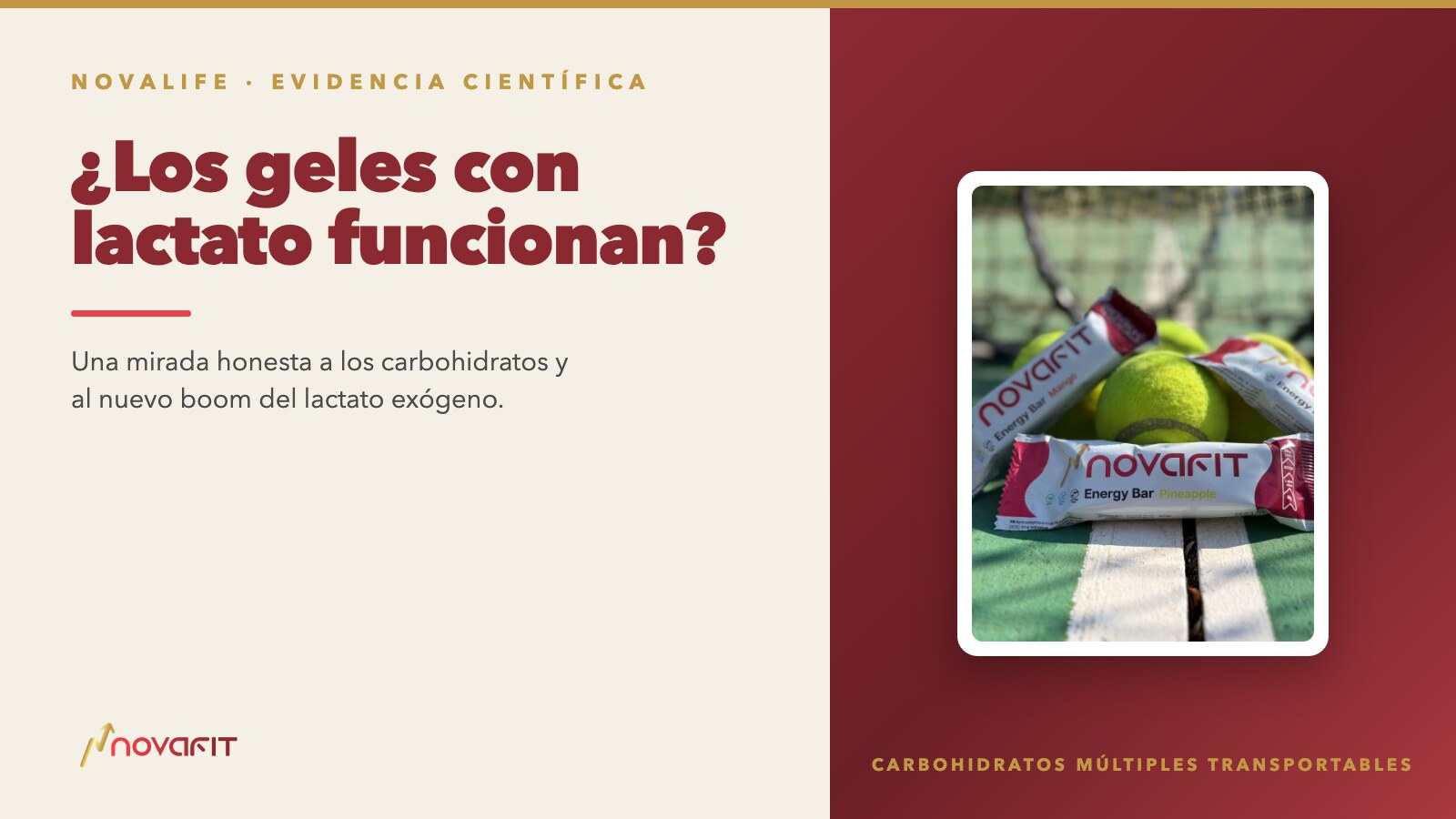
Because it's a chelated form designed to be absorbed more efficiently and with fewer digestive issues than inorganic forms. In NOVAFIT bars, by contrast, the magnesium is citrate (230 mg).
This content is informational and educational and does not replace the advice of a health or nutrition professional. NOVAFIT products are food supplements for athletes; do not exceed the recommended dose. If you have a medical condition, consult a professional before using them.